AI for Development: Girls Shaping the Digital Future
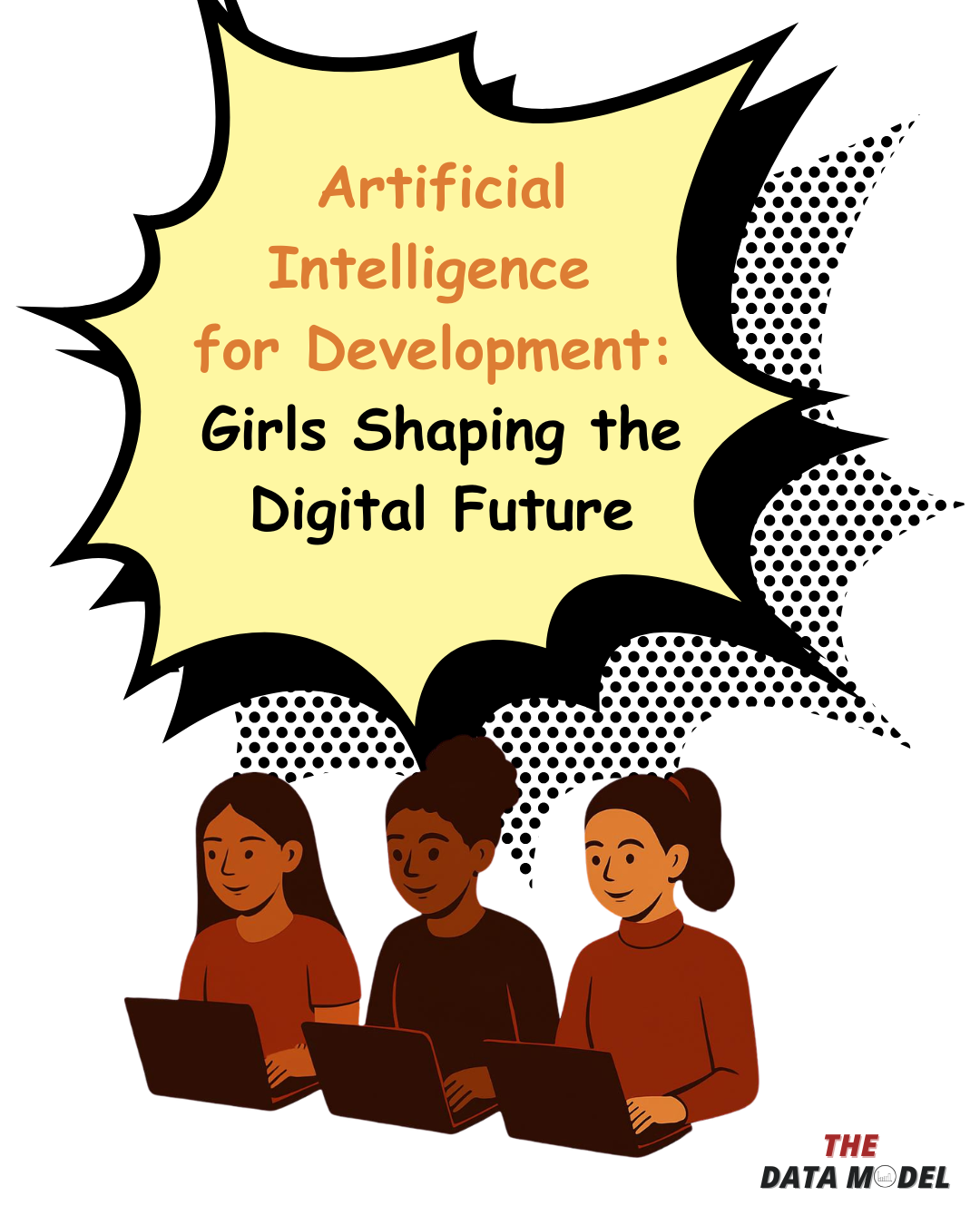
Every year, Girls in ICT Day serves as a global reminder that the future of innovation, economic growth, and social progress depends on who gets to participate in building technology. Today, April 23, 2026, the world celebrates International Girls in ICT Day under the theme “AI for Development: Girls Shaping the Digital Future.” This year’s theme recognizes that the future of artificial intelligence should not be built without girls.
Artificial intelligence has been around for a while, but with its widespread use in 2026, it is important to think about how we can make it useful for everyone - not just accessible. We know that it can help doctors detect diseases earlier, improve farmers’ crop yields, help students access personalized learning, and so much more. But if girls are excluded from designing and leading the development of these systems, AI risks reproducing or amplifying the same inequalities the world has been trying to solve forever.
The Significance of this Theme
Despite rapid growth and access to AI, women remain underrepresented in the digital workforce. According to the UNDP, in Latin America and the Caribbean, more women are graduating from STEM programs, but fewer are working in related fields. This tells me that girls are interested in STEM, but they also face barriers to entry into these fields. The goal of the UN is to fully close the gender gap by 2030, yet globally, women still make up only about 26.7% of the tech workforce. In the United States, women hold roughly 28% of computing roles, and in the European Union, only 17% of ICT specialists are women. Our representation drops even further in advanced fields such as AI engineering, machine learning, and data science. These numbers highlight a critical gap in access, encouragement, and opportunity.
This information matters because research consistently shows that diverse teams build better technology, and improve creativity, problem-solving, and product design. Specifically, in the field of AI, diversity also helps reduce bias in algorithms used for hiring, lending, healthcare, and public services. When girls participate, AI becomes smarter, fairer, and more useful for everyone. As I think about my personal interactions with my husband, we are so fundamentally different, I can attest to the fact that when we share our perspectives with each other, we enhance our own ways of thinking and doing things. I am always enriched when I learn from others with different perspectives, and technology is no different. We are in the Digital Age, which means that technology is the backbone of modern economies. So, when we exclude girls from advanced technology, economies lose out on innovation, productivity and diverse perspectives that solve problems effectively.
AI for Development: A Global Opportunity
The 2026 theme also connects AI with development, and it is evident that many of the world’s biggest challenges need digital solutions. AI is not just a tool that everyone can use for creating a series of homogeneous flyers or having conversations about productivity. Think broader. AI can support:
Education, through personalized tutoring and language translation tools
Healthcare, by enabling faster diagnosis and better patient forecasting
Agriculture, through precision farming and weather prediction
Climate Action, with disaster response systems. My friend and I even built a very simple prototype for this that you can read about here.
Despite all the ways in which AI can support global development, millions of girls still face barriers such as unequal internet access, limited STEM encouragement, lack of mentors, and stereotypes about who belongs in technology. Thus, they are unable to participate in global development. It is so important for young girls to have representation in these fields because the more we normalize seeing women in tech, the more girls will consider this as a viable career choice for themselves. This is why blogs that showcase women in tech are so important. When girls see women not just participating, but leading the way in technology, it helps us to close the gap which is a tremendous benefit for our countries and economies.
Actionable Steps
This year’s theme, “AI for Development: Girls Shaping the Digital Future”, is important, but how can we make it a reality? Creating meaningful change requires action from schools, families, companies, governments, and communities. Here are 10 practical ways to ensure that girls are included in the future of AI development:
1. Introduce AI Early: Expose girls to coding, robotics, and AI concepts in primary and secondary school. Curiosity starts young, so the earlier they can build their confidence, the better.
2. Make Learning Hands-On: Use real projects instead of theory alone. Let girls build chatbots, analyze data, create apps, or solve community problems using AI tools.
3. Highlight Women Role Models: Showcase women working in AI, engineering, cybersecurity, and data science. Visibility helps girls imagine themselves in those careers.
4. Create Mentorship Opportunities: Help girls to find mentors in tech who can answer questions, provide encouragement, and guide their career paths.
5. Offer Scholarships and Internships: Reduce financial and access barriers by funding camps, certifications, university programs, and workplace internships.
6. Build Inclusive Classrooms: In schools, especially co-ed schools, teachers should actively challenge stereotypes, encourage participation, and ensure girls are not sidelined in technical spaces.
7. Expand Digital Access: Reliable internet, laptops, and software access are essential. Talent exists everywhere, but opportunity does not. Having digital access fuels possibilities.
8. Teach Ethical AI: Girls should not only learn how to build AI, but how to question bias, privacy risks, and social impact. This helps them to think like leaders.
9. Support Girls’ Communities: There are coding clubs, hackathons, STEM groups, and online communities that create belonging and confidence. These groups cannot achieve their missions without your support.
10. Hire and Promote Women in Tech: Companies must commit to inclusive recruitment, leadership pathways, and fair advancement opportunities. Qualified women must be given fair opportunities like their counterparts in the workplace.
Moving Forward
Girls in ICT Day is more than a one-day celebration. It is an annual call to action. Encouraging girls to explore coding, data, AI, and engineering is not just about fairness; it is about building a better, smarter, and more inclusive world. It’s about creating better solutions for our global problems. Quite frankly, every single major global issue affects girls and women, so why shouldn’t we include them in the solutions, especially when the solutions are advanced technical ones? For every girl who learns to code, analyze data, or design systems, we move closer to a future where technology reflects the needs of everyone, not just a few. When girls rise in ICT, the world rises with them.
To girls reading this: You do not need to wait for permission to belong in technology. The apps, robots, AI systems, and solutions of tomorrow need your ideas, your creativity, and your leadership today. On this International Girls in ICT Day, the message is powerful: AI for Development is only possible when girls help shape the digital future. You are not too young for your voice to matter.