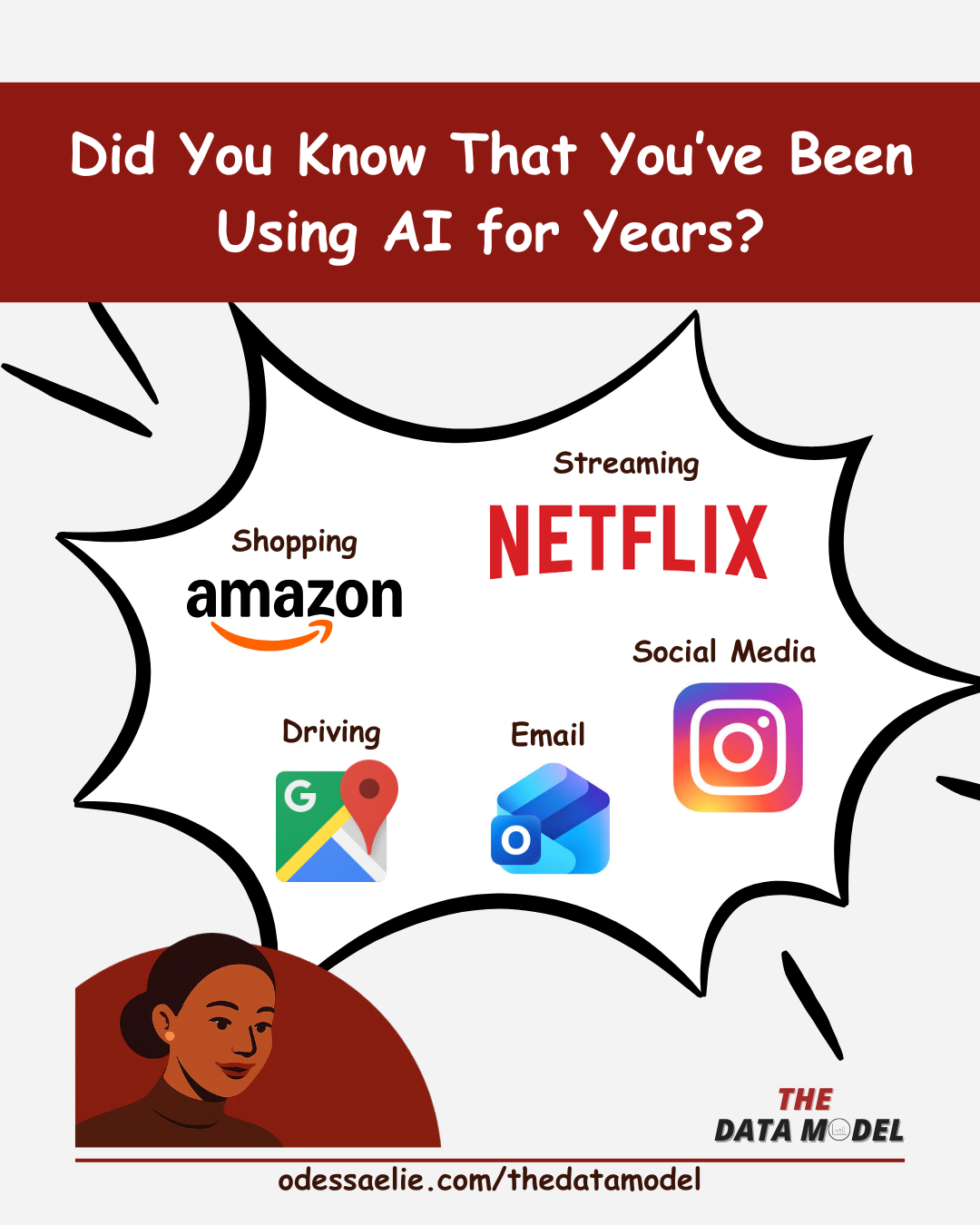
For many people, it seems like artificial intelligence (AI) suddenly arrived out of nowhere. One day the world was talking about the end of COVID-19 restrictions, then the next day we were talking about chatbots and image generators. Not literally, but that’s essentially how it feels. In this current age of AI, it seems like everyone is talking about it, companies are begging employees to use it, environmental activists are speaking out against it, and all of this started in 2022 when OpenAI released ChatGPT to the public. Despite this being the catalyst for the current AI boom, did you know that this is not the origin story of AI? AI has actually existed for decades, quietly powering tools millions of people use every day without even realizing it. Long before the recent boom, AI was already helping us to solve problems, save time, and make decisions. It simply worked behind the scenes.
Where Have You Seen AI Before?
So, if AI wasn’t just developed in 2022, where have you seen it before? When you use Google Maps or Apple Maps, you probably try to find the fastest route to your destination or a route that avoids tolls so you can save money. Your ability to do this is made possible by AI. It analyzes traffic patterns, predicts delays and even reroutes you when you miss your exit or when your current route is no longer the fastest route to your destination. When you subscribe to streaming services like Netflix, you usually see a list of recommendations about what to watch next based on shows you’ve watched in the past. This recommendation is powered by AI. When you shop on Amazon and you see suggestions of products you might like, these suggestions are powered by AI.
When you open your Gmail or Outlook inbox and you see emails in your spam or junk folder, this is AI attempting to protect you from cybercrime. When you’re in a rush, typing quickly on your cell phone and your typos are autocorrected, it is AI predicting what you meant to say and fixing it for you. When you use voice assistants like Siri and Alexa, they use NLP (Natural Language Processing) to answer your questions and follow your commands.
When your bank detects unusual transactions and flags fraudulent activities on your account, this is AI. When law enforcement uses facial recognition to identify criminals who are on the run, this is also AI.
I’m sure you’ve heard of all of these things in the past, but you probably haven’t given them much thought. All of these are powered by two things: AI and a plethora of data that is available to these systems whenever you click, search, purchase, swipe, rate or view something. By completing everyday digital tasks, you have provided data for AI to thrive in the background for a very long time. I’m not writing this to scare you. I’m writing this to inform you.
This data is used to train models, improve recommendations, personalize experiences, and automate decisions. In many cases, users exchanged data for convenience. For example, maps became faster, your social media feed became more relevant to you, checking out or finding complementary products became easier, and much more. Yet many people never fully realize how much data is being collected or how deeply algorithms shape what they see, buy, and believe.
Why the Current AI Boom Feels Different
So, if AI has been around for years, why does this season feel so revolutionary? The answer is visibility, capability, and accessibility.
Before the ChatGPT era, AI was simply used as a background character. It performed specific tasks like recommending a movie, detecting fraud, and translating phrases. Today’s generative AI can create text, images, music, video, and code in seconds. Instead of only analyzing information, it produces new content which is fascinating when the content is exactly what we ask for.
It is also public-facing now, so anyone with an internet connection can interact directly with advanced models through simple chat interfaces.
Another difference is speed. Improvements in cloud computing, larger datasets, and powerful chips have accelerated what AI can do. Tools that once required teams of engineers are now democratized, which means they are now available to students, creators, and small businesses.
What Now?
It is clear that today’s accessibility to AI has been revolutionary because it has lowered the barrier to entry for many people who either wanted to create content, boost productivity through tech, write code and much more. People are empowered by AI and companies want value out of it. AI has been around for a while, but what changed is that humans can now see it, use it directly, and feel its impact in real time. It’s exciting, and after reading some books and talking to people who were lucky enough to be alive at the time, I’m learning that this AI era feels eerily similar to the Internet era, when the world wide web became accessible to the public. Dear readers, AI is here and it’s taking the world by storm. The real challenge ahead is not whether AI can be valuable to society because we know that it has always been. The real challenge is whether society will use it responsibly, transparently, and for the benefit of everyone; ergo, it’s up to us to shape the future of AI. Will you use it for the greater good?